


Cold Weather and Your Tire Pressure Light: What It Means
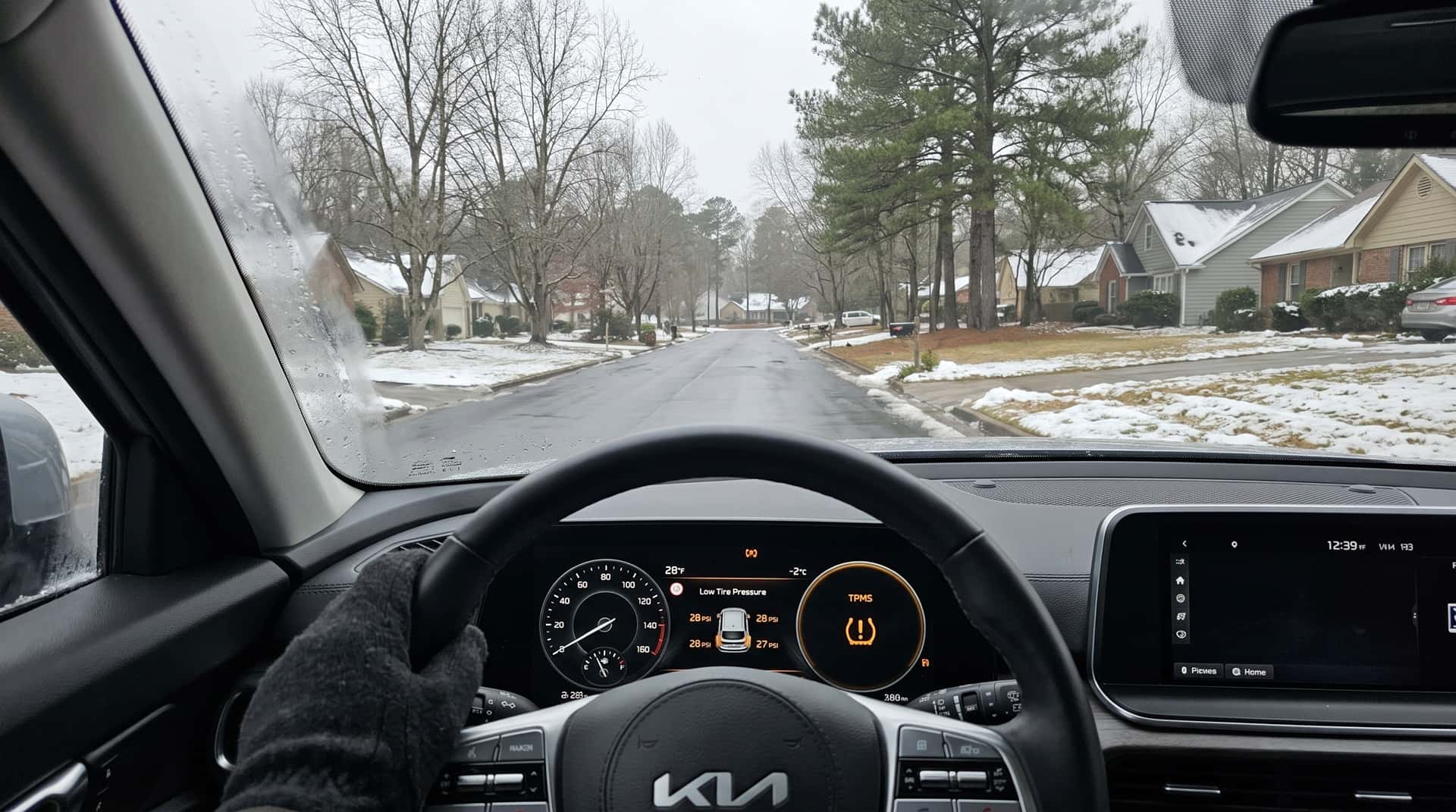
The first real cold morning of the season rolls in, you start the car, and there it is: the tire pressure light glowing on the dash. Before you worry about a flat, know that this is one of the most common things we see this time of year, and it usually has a simple explanation.
Why Does Cold Weather Trigger the Tire Pressure Light?
Air contracts as it cools. When the temperature drops overnight, the air inside your tires takes up less space, so the pressure falls even though nothing is wrong. A chilly Middle Georgia morning can be enough to dip below the threshold and switch the warning on. Often the light appears first thing and then turns off once the tires warm up from driving.
How Much Does the Pressure Actually Drop?
As a rule of thumb, tire pressure falls about 1 psi for every 10 degrees Fahrenheit that the temperature drops. A 30 degree swing between a warm afternoon and a cold morning can quietly pull a few psi out of every tire, which is often all it takes to trip the sensor.
What Should Your Tire Pressure Be?
Use the number on the sticker inside the driver door jamb, not the maximum pressure printed on the tire sidewall. The sidewall number is a limit, not a target. For the most accurate reading, check your tires when they are cold, before you have driven on them, and top off to the recommended level.
How to Reset the Tire Pressure Light
Once every tire is filled to the right pressure, drive a few miles. On most vehicles the system reads the corrected pressure and the light turns itself off. If it stays on after that, something else may be going on and it is worth having checked.
When It Is More Than Just the Cold
If the light keeps coming back soon after you air up, the cold is probably not the whole story. A slow leak from a nail, a tired valve, or an aging tire can look the same on the dash. That is the time to have someone take a closer look before a slow leak becomes a flat on the side of the road.
Let ALM Kia Perry Take a Look
Not sure what your pressure should be, or whether that light is the cold or a leak? The service team at ALM Kia Perry is glad to check your pressure, set it to the right level, and look over your tires for wear or damage. It is a quick stop that can save you a cold-morning headache.
Schedule service at ALM Kia Perry today. We proudly serve drivers in Perry, Warner Robins, and Macon.
Frequently Asked Questions
Why does my tire pressure light come on in cold weather?
Air contracts as it cools, so your tire pressure naturally drops when the temperature falls. A cold Middle Georgia morning can lower the pressure enough to trip the warning even when there is no leak. It often comes on overnight and may switch off once the tires warm up from driving.
How much does tire pressure drop in cold weather?
Tire pressure falls about 1 psi for every 10 degrees Fahrenheit that the temperature drops. So a 30 degree overnight swing can take a few psi out of every tire, which is often enough to trigger the light.
What should my tire pressure be?
Use the number on the sticker inside the driver door jamb, not the maximum printed on the tire sidewall. Check the pressure when the tires are cold, before you have driven, for the most accurate reading.
How do I turn off my tire pressure light?
Fill each tire to the recommended pressure, then drive a few miles. On most vehicles the light turns itself off once the system reads the correct pressure. If it stays on, have it checked.
Should I be worried if the light keeps coming back?
If the light returns soon after you fill the tires, that can point to a slow leak from a nail, a valve, or an aging tire. It is worth having the team take a look before it leaves you with a flat.
0 comment(s) so far on Cold Weather and Your Tire Pressure Light: What It Means